User Web Mockup Website Vector: A Practical Guide for Designers and Developers
Understanding User Web Mockup Website Vector
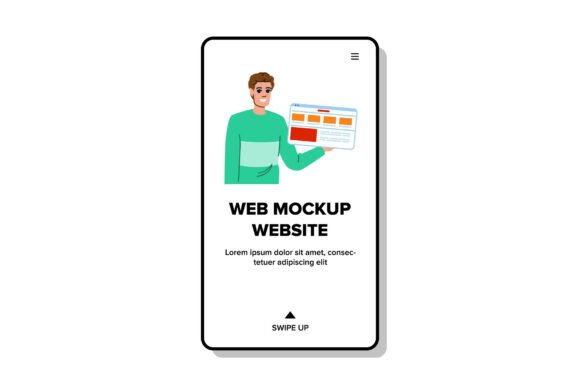
The User Web Mockup Website Vector is a digital design resource that offers scalable, editable illustrations of web interfaces. These vector-based mockups are commonly used by designers, developers, and marketers to visualize websites, landing pages, or web applications before they are fully developed. The mockups typically include interface elements such as navigation bars, buttons, icons, and layout structures, rendered in a flat cartoon style that is both modern and adaptable.
Because they are built using vector graphics, these mockups can be resized without losing quality, making them ideal for presentations, prototypes, and design documentation. They are often used in both desktop and mobile contexts, allowing teams to preview how a website will appear across different screen sizes and devices.
Why Designers and Teams Use User Web Mockup Website Vector
Professionals across industries turn to the User Web Mockup Website Vector for several key reasons. One of the most common is the need to present design concepts in a clean, professional format. Whether pitching to stakeholders or showcasing a portfolio, having a polished visual representation of a website layout can significantly enhance communication and clarity.
Another reason is the efficiency it brings to the design process. Instead of building mockups from scratch, designers can use pre-made vector illustrations and customize them to fit their specific needs. This saves time and ensures consistency in style and layout across different project phases.
Key Benefits of Using User Web Mockup Website Vector
Using the User Web Mockup Website Vector comes with several practical benefits:
- Scalability: Vector graphics maintain clarity at any size, making them suitable for both digital and print use.
- Customizability: Designers can edit colors, layout elements, and components to match branding or design preferences.
- Cross-device visualization: Mockups often include both mobile and desktop views, helping teams evaluate responsive design strategies.
- Time-saving: Ready-made templates reduce the need to build mockups from scratch, accelerating the design and review process.
- Professional presentation: High-quality visuals support better client communication and stakeholder buy-in.
Considerations and Potential Tradeoffs
While the User Web Mockup Website Vector offers many advantages, there are also important tradeoffs to consider. One potential drawback is the risk of over-reliance on pre-made templates. If not customized properly, mockups can appear generic or fail to accurately reflect the intended user experience.
Additionally, while vector mockups are excellent for visual presentation, they are not interactive. Teams that require user testing or clickable prototypes may need to supplement vector mockups with tools like Figma, Adobe XD, or Sketch to simulate real user interactions.
Another consideration is licensing. Designers should ensure they have the appropriate rights to use and modify the mockup assets, especially when delivering work to clients or using them in commercial projects.
When User Web Mockup Website Vector Is a Strong Fit
The User Web Mockup Website Vector is particularly well-suited for:
- Early-stage design concepts: When the goal is to communicate layout ideas and visual direction, vector mockups offer a fast and effective solution.
- Client presentations: Visual clarity and professionalism are essential when presenting to non-technical audiences or decision-makers.
- Portfolio showcases: Designers can display their work in a visually appealing format that highlights both layout and aesthetic choices.
- Marketing and promotional materials: Companies creating case studies or promotional content often use mockups to illustrate web design services or product features.
When Alternatives May Be Worth Considering
There are scenarios where alternatives to the User Web Mockup Website Vector might be more appropriate:
- Interactive prototyping: If user interaction and functionality testing are required, tools like Figma or InVision may be better options.
- High-fidelity UI design: For pixel-perfect interface work, especially with complex animations or transitions, dedicated UI design tools are often more suitable.
- Code-based mockups: Developers may prefer using HTML/CSS frameworks or code-based design systems to ensure technical feasibility and responsiveness.
In such cases, the vector mockup can still serve as a starting point or reference but may not be sufficient on its own.
How to Evaluate Whether User Web Mockup Website Vector Meets Your Needs
When deciding whether to incorporate the User Web Mockup Website Vector into your workflow, consider the following questions:
- What is the primary use case? If you're presenting design concepts or creating visuals for marketing, vector mockups are likely a good fit. If you need interactivity or development-ready assets, you may need additional tools.
- Do you have the time or resources to customize the mockup? Some templates may require editing to align with your brand or project requirements. Ensure you have the design skills or tools to make necessary adjustments.
- What level of detail is needed? For high-level layout visualization, vectors work well. However, for detailed UI elements or animations, more specialized tools may be necessary.
- Are there licensing or usage restrictions? Always check the licensing terms to ensure compliance, especially for commercial use or client deliverables.
Conclusion: Making an Informed Choice
The User Web Mockup Website Vector is a versatile and valuable asset for designers, developers, and marketers who need to visualize web interfaces efficiently. Its scalability, customizability, and compatibility with both mobile and desktop navigation make it a strong option for early-stage design exploration and client-facing presentations.
However, it's important to assess your specific project needs before committing to this format. If your work requires interactivity, high-fidelity UI design, or direct development integration, you may benefit from using complementary tools alongside or instead of vector mockups.
Ultimately, the User Web Mockup Website Vector serves as a practical bridge between concept and execution. When used thoughtfully, it can streamline the design process, enhance communication, and help bring web projects to life more efficiently.