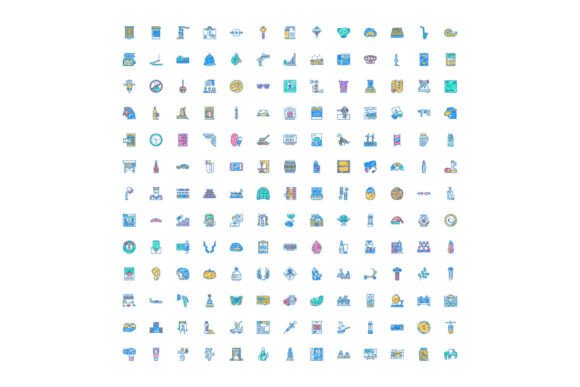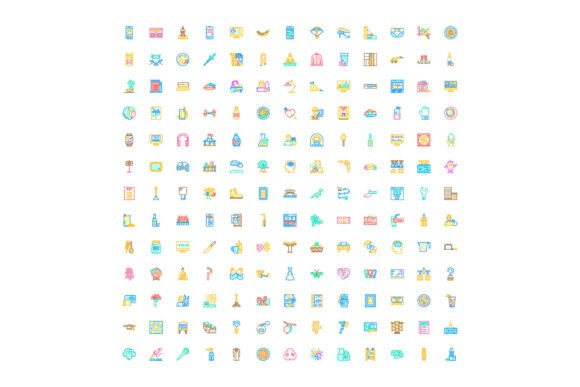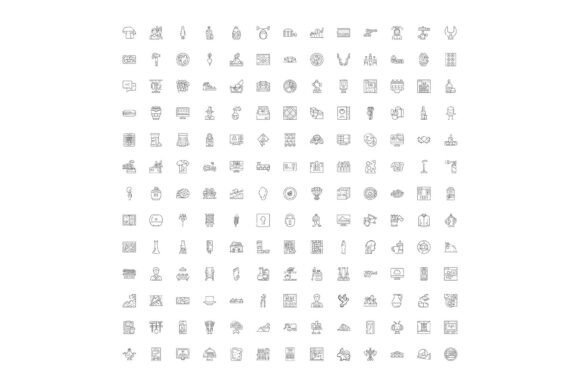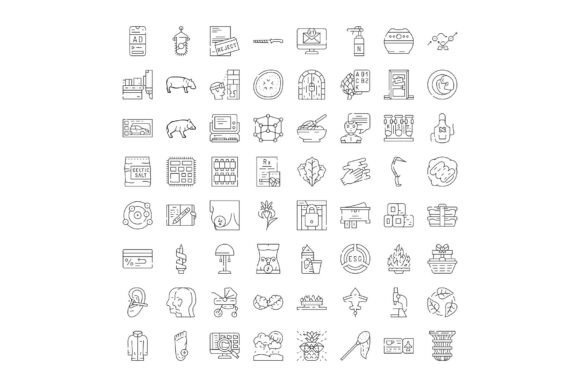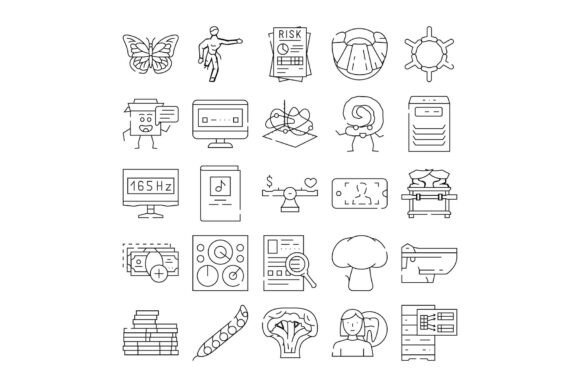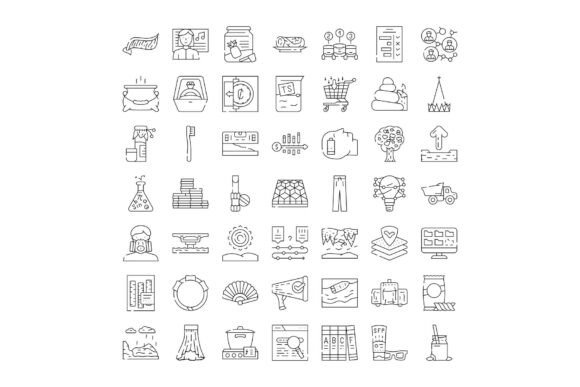
Various Line Art Icons Representing Obje: A Versatile Visual Resource for Modern Design
Visual communication is more important than ever in web and app design. With attention spans shrinking and digital interfaces growing more complex, clarity and simplicity are key. One of the most effective tools for achieving this balance is the use of line art icons, especially a diverse collection of thin line icons illustrating common objects, abstract concepts, tools, food, technology, education, and lifestyle elements.
These icons, often grouped under the broader category of Various Line Art Icons Representing Obje, offer a clean, minimalistic approach to visual storytelling. Their adaptability makes them ideal for a wide range of digital applications, from mobile apps to responsive websites and UI/UX dashboards.
Why Thin Line Icons Are a Designer’s Best Friend
Thin line icons are known for their elegance and subtlety. Unlike bold or filled icons, they rely on delicate strokes and precise outlines to convey meaning. This minimalist aesthetic is particularly well-suited to modern design trends that emphasize whitespace, clean typography, and uncluttered layouts.
Designers often reach for thin line icons when they need to communicate ideas without overwhelming the user. Whether it's a settings gear, a calendar date, or a shopping cart, these icons distill complex actions or objects into easily recognizable visuals. Their simplicity also allows for greater flexibility in color schemes and responsive scaling across devices.
Applications Across Industries
One of the standout features of the Various Line Art Icons Representing Obje collection is its breadth. This isn’t a niche set limited to a single domain — it spans across industries and use cases:
- Technology: Icons for devices, cloud storage, Wi-Fi signals, and software interfaces help users navigate digital platforms with ease.
- Education: From books and graduation caps to microscopes and calculators, these icons enhance learning platforms and educational apps.
- Lifestyle: Representing everything from yoga mats to bicycles, these icons support wellness, fitness, and productivity apps.
- Food & Dining: Spoon-and-fork symbols, coffee cups, and grocery bags are essential for restaurant apps, recipe platforms, and delivery services.
- Tools & Utilities: Icons for wrenches, hammers, paintbrushes, and more make it easy to categorize functions in DIY, design, and maintenance apps.
Because of this diversity, designers can maintain a consistent visual language across different sections of an app or website without needing to source icons from multiple libraries.
Scalability and Responsiveness in Modern UI Design
In today’s multi-device world, scalability is a critical consideration. Thin line icons are vector-based, meaning they can be resized without losing clarity. This makes them ideal for responsive design, where the same icon might appear on a smartphone screen and a desktop monitor with equal effectiveness.
Additionally, because of their low visual weight, thin line icons can be used in combination with other design elements without causing clutter. They work well in navigation bars, tool tips, and even as part of form labels, where clarity and space efficiency are crucial.
Customization and Branding Potential
Another advantage of using Various Line Art Icons Representing Obje is their adaptability to brand identity. Since they are typically monochromatic or use minimal color by default, they can be easily recolored to match a brand’s palette. Designers can also adjust stroke weights, add shadows, or integrate them into more complex illustrations without compromising their recognizability.
This level of customization ensures that even though icons may come from a pre-made set, they can still feel unique to a particular product or service. For startups and small businesses looking to maintain a professional look without investing heavily in custom icon design, this is a game-changer.
Use Cases in Real-World Projects
Let’s take a look at how these icons play a role in actual design workflows:
- Mobile App Navigation: In a fitness app, thin line icons for running shoes, heart rate, and water bottles can guide users through features without text labels, improving usability for international audiences.
- E-commerce Platforms: Icons for shopping carts, wishlists, and product categories help streamline the customer journey, reducing cognitive load and increasing conversion rates.
- Dashboard Interfaces: For SaaS platforms, thin line icons representing analytics, user profiles, and notifications make complex dashboards easier to parse at a glance.
- Travel and Lifestyle Apps: Icons for maps, suitcases, and hotel beds can be used across travel booking apps, enhancing the user experience with intuitive visuals.
Choosing the Right Icon Set for Your Project
When selecting from a diverse collection of thin line icons illustrating common objects, there are a few key considerations to keep in mind:
- Consistency: Ensure all icons share the same stroke width, curvature, and overall style to maintain a unified look.
- Relevance: Choose icons that clearly represent the functions or concepts they’re associated with. Avoid overly abstract designs that could confuse users.
- Licensing: Always verify that the icon set is appropriately licensed for commercial use, especially if you're building a paid product or service.
- File Format: SVG (Scalable Vector Graphics) is preferred for icons due to its scalability and compatibility with modern web standards.
Where to Find High-Quality Thin Line Icon Sets
There are numerous platforms offering Various Line Art Icons Representing Obje for both personal and commercial use. Some of the most popular include:
- Flaticon – Offers a vast library of thin line icons with flexible licensing options.
- The Noun Project – Known for its standardized, symbolic icon design language.
- Icons8 – Provides both free and premium icon sets, including thin line styles.
Many of these platforms allow designers to search by category, making it easy to find icons that represent tools, food, technology, and more.
Final Thoughts on Icon Design Trends
As digital design continues to evolve, so too does the role of icons in user interfaces. Thin line icons, especially those from a diverse collection of thin line icons illustrating common objects, remain a staple in the designer’s toolkit due to their clarity, flexibility, and aesthetic appeal.
Whether you're building a mobile app, redesigning a website, or crafting a user dashboard, incorporating these icons can significantly enhance the user experience. They offer a universal visual language that transcends text, making digital interfaces more intuitive and inclusive.
For designers and developers alike, investing time in selecting or customizing the right set of icons — like the Various Line Art Icons Representing Obje — is a decision that pays dividends in usability, professionalism, and brand recognition.