Enhancing Digital Design with a Diverse Set of Vector Icons for Web and UI Projects
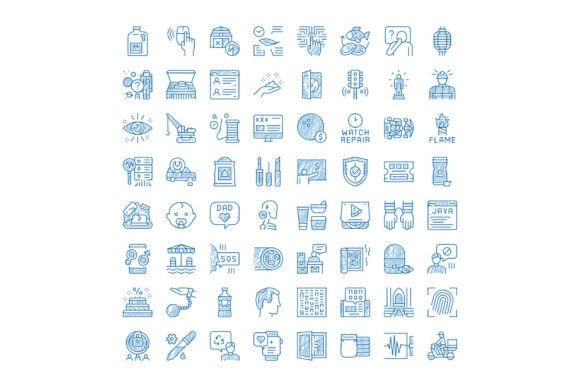
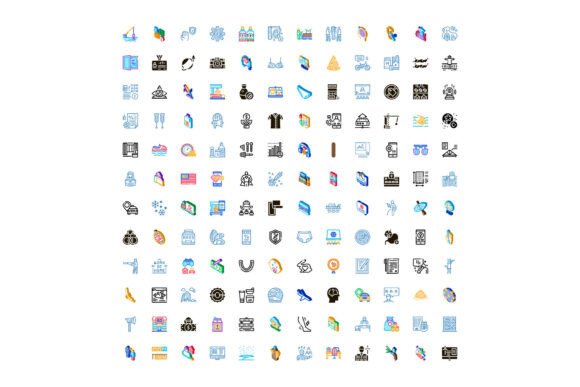
In the fast-paced world of digital design, visual clarity and consistency are more important than ever. A Set of Diverse Vector Icons for Web and applications plays a critical role in delivering intuitive user experiences across platforms. These icons—often crafted as colorful outline glyph icons—represent everyday objects, activities, concepts, and essential UI elements. Whether you're designing a mobile app, a website, or an infographic, having access to a comprehensive, well-designed icon set can streamline your workflow and elevate the final product.
Why Icon Sets Matter in Modern Design
Icons are more than just decorative elements; they serve as visual cues that guide users through interfaces. A well-chosen icon can convey meaning instantly, reducing cognitive load and improving usability. As digital platforms become increasingly complex, the demand for clear, scalable, and versatile icons has grown significantly.
Vector icons, especially those in outline style, offer the advantage of being resolution-independent. This means they maintain quality at any size, making them ideal for responsive web design and high-resolution displays. Moreover, a diverse set allows designers to maintain visual harmony across different sections of an app or website without resorting to mismatched or inconsistent graphics.
How Icon Design Reflects Changing User Expectations
User expectations have evolved alongside advancements in technology and design trends. Today's audiences are accustomed to sleek, intuitive interfaces that feel both modern and familiar. A Collection of colorful outline glyph icons meets this demand by combining simplicity with visual appeal. These icons are minimalist yet expressive, making them suitable for a wide range of applications—from productivity tools to lifestyle apps.
As mobile-first design becomes the norm, the importance of lightweight, scalable assets grows. Outline icons, in particular, tend to be less visually heavy than filled icons, which helps maintain a clean aesthetic without sacrificing clarity. This subtle balance is key in crafting interfaces that feel uncluttered yet informative.
The Role of Icons in Branding and Visual Identity
Icon sets are not just functional—they also contribute to a brand's visual identity. When used consistently, icons reinforce brand recognition and help establish a cohesive design language. For example, a fitness app might use a set of activity-based icons that reflect movement and vitality, while a finance app might lean toward more structured, professional visuals.
Designers working on branding projects can benefit from a Set of Diverse Vector Icons for Web and by selecting icons that align with the brand's tone and message. This approach ensures that every visual element, from buttons to infographics, supports the brand narrative rather than competing with it.
Practical Benefits for Designers and Developers
For professionals working in web design, app development, or digital illustration, a versatile icon set is a time-saver. Having access to a wide range of pre-designed icons reduces the need to create custom graphics from scratch. This efficiency is especially valuable in fast-moving environments where meeting deadlines is crucial.
- Scalability: Vector icons scale without loss of quality, making them suitable for both small buttons and large banners.
- Customization: Outline icons can be easily recolored or modified to fit different design themes.
- Consistency: Using a unified set ensures visual harmony across different sections of a digital product.
Moreover, many modern icon libraries are compatible with popular design tools like Figma, Sketch, and Adobe XD, which further streamlines the design process. Some sets even include variations for different states—like active and inactive tabs—making them highly functional for interactive elements.
How Icon Sets Support Modern Workflows
Design systems and component-based workflows are becoming standard in the industry, especially among teams working on large-scale applications. A well-organized icon library integrates seamlessly into these systems, allowing for consistent reuse and faster development cycles.
For example, a team building a SaaS platform might use a Collection of colorful outline glyph icons across dashboards, modals, and navigation menus. This uniformity not only enhances the user experience but also simplifies maintenance and updates over time.
Educators, Bloggers, and Content Creators Can Benefit Too
It's not just developers and designers who benefit from high-quality icon sets. Educators creating digital course materials, bloggers illustrating posts, and marketers building infographics can all find value in using icons to enhance communication.
Icons help break down complex ideas into digestible visuals, making content more engaging and easier to understand. A blog post about time management, for instance, might use icons to represent tasks, calendars, and productivity tools. Similarly, a teacher designing a presentation on environmental science might use icons to illustrate recycling, energy conservation, and wildlife.
- Visual storytelling: Icons help illustrate concepts without relying solely on text.
- Improved readability: They break up dense content and guide the reader's eye.
- Professional polish: Even amateur creators can achieve a polished look with the right icon set.
Choosing the Right Icon Set for Your Project
When selecting a Set of Diverse Vector Icons for Web and other digital applications, consider the following factors:
- Comprehensiveness: Does the set include icons for common actions, objects, and concepts relevant to your project?
- Style consistency: Are the icons visually unified in terms of line weight, corner radius, and overall aesthetic?
- Licensing: Is the set available under a license that permits commercial use and redistribution?
- Compatibility: Can the icons be easily integrated into your preferred design or development tools?
It's also worth checking if the set includes variations for different states or themes—such as light and dark mode support. Some premium icon libraries offer customization tools that allow you to tweak colors, stroke widths, or icon styles to match your design system precisely.
Looking Ahead: The Future of Icon Design
As design trends continue to evolve, we can expect to see more dynamic and adaptive icon systems. The rise of AI-assisted design tools may soon enable automatic icon generation based on specific themes or content types. Additionally, the growing emphasis on accessibility is likely to influence icon design, with more attention paid to clarity, contrast, and semantic meaning.
However, the core value of a well-crafted icon set remains unchanged: it enhances communication, improves usability, and supports a cohesive visual language. Whether you're building a mobile app, designing a website, or creating digital illustrations, investing in a reliable Collection of colorful outline glyph icons is a decision that pays off in both time and quality.