Understanding the Power of Isometric Icon Collections: Enhancing Design with Vari and Modern Visual Storytelling
Isometric icon collections have become a cornerstone of modern digital design, offering a visually engaging and versatile way to communicate complex ideas. Among these, the Vari isometric icon collection stands out for its comprehensive range and adaptability across multiple domains. Whether you're designing a website, creating an infographic, or building a presentation, isometric icons offer a unique blend of aesthetics and functionality that can elevate your visual communication.
What Are Isometric Icons?
Isometric icons are a type of 3D illustration drawn using parallel projection, giving them a three-dimensional appearance while maintaining a flat design aesthetic. These icons are typically viewed at a 30-degree angle, allowing for a pseudo-3D effect that adds depth without the complexity of full 3D modeling. This style is particularly popular in web design, UI/UX development, and data visualization due to its clean, scalable, and easily recognizable format.
Why Choose Isometric Icon Sets?
Isometric icons bridge the gap between flat design and realistic 3D graphics, offering a middle ground that's both visually appealing and functionally effective. Here are some key reasons why designers and developers are increasingly turning to isometric icon collections:
- Visual Depth: Adds a sense of space and realism without overwhelming the design.
- Scalability: Maintains clarity at different sizes, ideal for responsive web design.
- Consistency: Uniform perspective ensures cohesive visual language across platforms.
- Flexibility: Easily customizable to match brand colors, themes, and styles.
Exploring the Vari Isometric Icon Collection
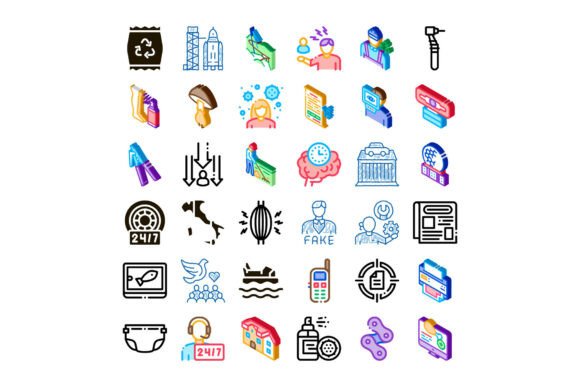
The Vari isometric icon collection is a meticulously curated set of icons that spans a wide range of themes and applications. From business and technology to travel and personal objects, Vari offers a robust toolkit for designers looking to enhance their projects with visually engaging elements.
Comprehensive Coverage of Concepts
One of the standout features of the Vari collection is its breadth of subject matter. Whether you're illustrating a corporate dashboard or designing a travel-themed app, you're likely to find icons that fit your needs. The collection includes representations of:
- Business: Charts, graphs, team collaboration, and financial tools.
- Communication: Messaging, video conferencing, and social media elements.
- Technology: Devices, cloud computing, AI, and data management visuals.
- Travel: Transportation modes, maps, and location-based services.
- Personal Objects: Everyday items, wellness tools, and lifestyle elements.
This diversity makes Vari an invaluable resource for designers working across industries and platforms, ensuring they can find the right visual representation for any concept.
The Practical Relevance of Isometric Icons in Modern Design
In today's visually driven digital landscape, the ability to convey information quickly and effectively is more important than ever. Isometric icons play a crucial role in this context, helping users navigate interfaces, understand data, and engage with content in a more intuitive way.
Improving User Experience (UX)
Icons are more than just decorative elements—they serve as functional tools that guide users through digital experiences. Isometric icons, with their added depth and clarity, can enhance usability by making interfaces more scannable and interactive. For example, in a mobile app, a well-designed isometric icon can instantly communicate the purpose of a feature without the need for lengthy text descriptions.
Enhancing Infographics and Presentations
Infographics rely heavily on visual storytelling to present data and concepts in an engaging format. Isometric icons add a dynamic layer to these visuals, making complex information more digestible. In business presentations, educational materials, or marketing reports, the use of isometric icons can help highlight key points and improve overall comprehension.
How Isometric Icon Collections Fit Into Different Industries
The versatility of isometric icons allows them to be integrated into a wide range of professional and creative fields. Let’s explore how different industries can benefit from using collections like the Vari isometric icon set:
Business and Marketing
In the business world, isometric icons are used to represent data, strategies, and workflows in a visually appealing manner. From dashboards to marketing materials, these icons help simplify complex processes and make presentations more engaging. For example, a sales funnel can be illustrated using a series of isometric icons showing customer progression through different stages.
Education and E-Learning
Educational platforms and e-learning modules benefit greatly from isometric icons as they help break down information into digestible visuals. Whether explaining a scientific concept or illustrating a historical event, isometric icons provide a visual anchor that enhances learning retention and engagement.
Technology and Software Development
For software developers and tech startups, isometric icons are essential for creating intuitive user interfaces. They are commonly used in SaaS platforms, mobile apps, and web dashboards to represent features, settings, and navigation options. With the rapid evolution of technology, having a scalable and adaptable icon system like Vari ensures that design elements remain relevant and up-to-date.
Travel and Tourism
Isometric icons are particularly useful in the travel industry, where visual cues help users quickly understand maps, itineraries, and destination guides. From flight status indicators to hotel amenities, these icons provide a consistent and recognizable visual language that enhances user experience across travel apps and websites.
Common Misconceptions About Isometric Icons
While isometric icons are widely appreciated for their aesthetic appeal and functionality, there are a few misconceptions that designers and users should be aware of:
- They are only for decorative purposes: While they do enhance visual appeal, isometric icons are primarily functional and play a key role in user navigation and information hierarchy.
- They are difficult to implement: Thanks to scalable vector formats and design tools like Figma, Sketch, and Adobe Illustrator, integrating isometric icons into projects is more accessible than ever.
- They are not accessible: When used thoughtfully with proper contrast and context, isometric icons can be just as accessible as flat icons, especially when paired with descriptive text or alt attributes.
How to Get the Most Out of Your Isometric Icon Collection
Whether you're using the Vari isometric icon collection or another set, here are some best practices to ensure you're leveraging these assets effectively:
- Choose icons that align with your brand identity: Ensure that the style, color, and tone of the icons match your overall design language.
- Maintain consistency: Use icons from the same collection to preserve visual harmony across your project.
- Use them to enhance, not replace, text: Icons should support content, not confuse users by replacing necessary labels.
- Optimize for performance: Compress and export icons in efficient formats like SVG or WebP to maintain quality without slowing down your website or app.
Conclusion: Embracing the Future of Visual Communication
As digital design continues to evolve, the role of isometric icons—especially those from comprehensive collections like Vari—becomes increasingly important. These icons not only enhance the visual appeal of digital products but also improve usability, engagement, and accessibility. Whether you're a seasoned designer or a beginner exploring the world of UI/UX, incorporating isometric icons into your workflow can significantly elevate your creative output and user experience.
By understanding the purpose, potential, and practical applications of isometric icon sets, you're better equipped to make informed design decisions that resonate with your audience and stand the test of time in an ever-changing digital landscape.